
 sales@abaw.ae
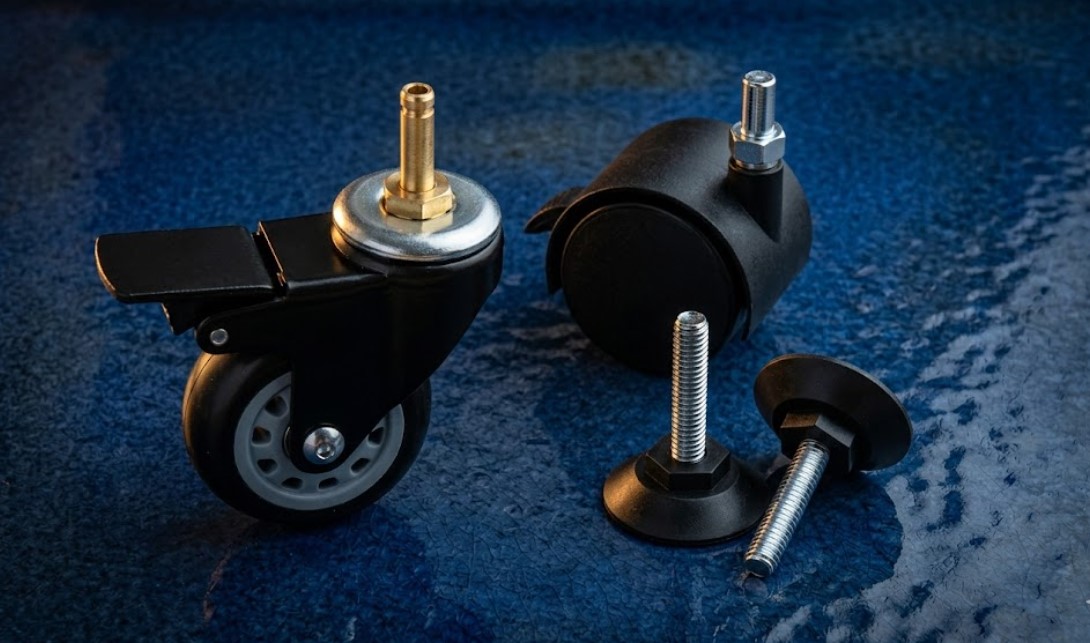
Choosing between caster wheels and glide wheels affects how your furniture or equipment performs, feels, and protects your flooring. Whether you are outfitting an office, workshop, home, or industrial space, understanding the differences and applications ensures efficiency, longevity, and value from every component.
This guide provides practical insights on distinctions, uses, materials, and expert buying advice.
What Are Glide Wheels
Glide wheels are stationary support pads installed under furniture legs. They do not roll like traditional wheels but slide with low friction making them ideal for furniture that rarely moves.
Glides are made from materials such as plastic, metal, felt, or nylon. Felt glides protect hardwood and laminate floors from scratches. Plastic and nylon glides offer durability and versatility for general use. Metal glides are strong and suitable for heavy furniture but require floor protection in some cases.
Types of Glide Wheels
Felt Glides
Soft felt pads that glide smoothly over hardwood, laminate, and tile floors. They reduce friction and prevent scratches, making them ideal for dining tables, office chairs, and furniture that moves occasionally.
Plastic and Nylon Glides
Plastic and nylon glides offer durability and versatility for general use, resisting wear and providing stable support for medium to heavy furniture These glides are easy to install, cost-effective, and suitable for homes, offices, and commercial spaces.
Metal Glides
Strong and robust, metal glides are designed to handle heavy loads in industrial and commercial applications. They offer long-lasting performance but may require additional floor protection on delicate surfaces.
Adjustable Glides
Threaded adjustable glides allow furniture to be leveled on uneven floors. They are practical for tables, cabinets, or machinery that need stability and precise alignment.
Glide wheels are best when stability is more important than mobility. They work well for dining tables, stationary cabinets, bookshelves, and furniture that is rarely moved.
What Are Caster Wheels
Caster wheels are rotating wheels mounted onto a fork or bracket attached to furniture or equipment. They allow smooth rolling movement in multiple directions, making them ideal for items that require frequent repositioning.
A complete caster system includes the wheel, the mounting plate, and sometimes a locking mechanism. Caster wheels are available in materials such as polyurethane, rubber, nylon, and metal. Material choice affects durability, noise, and floor protection.
Types of Caster Wheels
Swivel Casters
These casters rotate 360 degrees, allowing furniture or equipment to move in any direction with ease. They are ideal for office chairs, mobile carts, and workstations that require full maneuverability.
Rigid Casters
Rigid casters move in a straight line, providing stability and controlled movement. They are perfect for heavy furniture, trolleys, and equipment that needs to follow a fixed path.
Locking Casters
Locking casters allow furniture or equipment to stay securely in place when needed. They combine mobility and stability, making them suitable for desks, cabinets, and medical or industrial applications.
Material Specific Wheels
These wheels are made from materials such as rubber, polyurethane, nylon, or metal to match surface types and load requirements. Selecting the right material reduces floor damage, noise, and wear while optimizing performance.
Choosing the correct caster wheel material can prevent floor damage, reduce noise, and improve mobility for furniture and equipment in offices, workshops, and industrial settings.
Key Differences Between Caster Wheels and Glide Wheels
Cost:
 Guided Tour: Higher cost, includes professional expertise and organized experience
- Self-Guided Tour: More budget-friendly with flexible planning options
Local Insight:
- Guided Tour: In-depth explanations and historical knowledge from experts
- Self-Guided Tour: Limited insights unless you research in advance
Flexibility:
- Guided Tour: Fixed schedule, set stops, and pre-planned timing
- Self-Guided Tour: Complete control over itinerary and time management
Hidden Gems:
- Guided Tour: Access to exclusive spots and lesser-known locations
Self-Guided Tour: Possibility of missing unique or offbeat places
Material Considerations for Wheels and Glides
The material of caster wheels and glide wheels affects performance, noise, and floor protection.
- Polyurethane caster wheels offer durability, quiet operation, and protect floors from scratches and damage.
- Rubber wheels absorb shock and provide traction on hard or uneven surfaces, making them ideal for industrial and workshop environments.
- Hard nylon or metal glides are strong but may scratch softer floors unless protected
Choosing the right wheel or glide material is critical for efficiency, longevity, and floor safety in residential, office, and industrial environments.
Uses for Caster Wheels
Office Chairs
Casters are standard on office chairs to provide mobility, ease of repositioning, and flexibility for desk work.
Mobile Furniture
Utility carts, trolleys, and movable furniture benefit from caster wheels, making it easier to rearrange layouts.
Industrial Equipment
Heavy machinery, storage racks, and industrial carts rely on casters for frequent repositioning and workflow efficiency.
Uses for Glide Wheels
Boardroom and Meeting Chairs
Glides keep chairs stationary while maintaining a professional and organized appearance in conference or meeting spaces.
Dining and Living Room Furniture
Glides secure tables, cabinets, or lounge furniture in place, preventing accidental movement during daily use.
Protection
Glides protect floors, carpets, and rugs from damage while offering minimal sliding movement for occasional repositioning.
How to Choose the Right Solution
Several practical factors help you select between caster wheels and glide wheels.
Mobility Requirements
Choose caster wheels for furniture that needs frequent movement. Choose glide wheels for furniture that remains mostly stationary.
Floor Type
For hardwood and tile floors choose soft polyurethane or felt to protect surfaces. On carpeted floors hard caster wheels roll easier while glides provide stability but require more effort.
Load and Use
Heavier furniture or equipment used dynamically benefits from larger caster wheels. Stationary furniture that occasionally needs adjustment works best with glide solutions.
Noise and Maintenance
Glide wheels are near silent and low maintenance. Caster wheels may require occasional cleaning and lubrication to roll smoothly.
Matching these factors ensures durable, functional, and floor safe furniture solutions.
Pros and Cons Summary
Glide Wheels
- Pros: Stable, quiet, and excellent floor protection
- Cons: Limited mobility and difficult to move long distances
Caster Wheels
- Pros: Easy to move, versatile, supports heavy loads
- Cons: Can damage floors if material is incorrect and requires some maintenance
This summary helps buyers align wheel selection with their furniture and operational needs.
FAQs
What is the main difference between caster wheels and glide wheels?
Caster wheels roll and pivot furniture for mobility. Glide wheels slide with minimal movement focusing on stability.
Are caster wheels better for hardwood floors?
Soft polyurethane or rubber caster wheels reduce noise and prevent scratches, making them suitable for hardwood.
Can glide wheels be used on carpeted floors?
Glide wheels work on low pile carpet but may require more effort to slide furniture smoothly.
Do caster wheels require maintenance?
Yes, caster wheels benefit from occasional cleaning and lubrication to maintain smooth performance.
Conclusion
Choosing between caster wheels and glide wheels is about balancing mobility, floor protection, noise, and maintenance. Casters are ideal when frequent movement and maneuverability are required while glides offer quiet stability for stationary furniture. Selecting the correct system improves workflow efficiency and prolongs furniture life.
ABAW is a trusted furniture hardware provider delivering durable caster wheels and glide wheels designed for residential, office, and industrial applications.
Connecting with ABAW ensures long lasting performance, floor protection, and smooth operation for all furniture and equipment needs.
Keep Reading Related Blogs
- Why Polyurethane Is the Ideal Material for Wheels & Rollers: Durable, smooth, and floor-friendly wheels for every application
- What Is Polyurethane Material? Properties & Uses Explained: Explore its properties, structure, and real-world applications.
- Best Wheels & Casters for the Medical Industry: Designed for quiet, safe, and reliable healthcare mobility.
- Ultimate Guide to Caster Wheels Selection and Applications: Everything you need to choose the right caster wheel.
- Polyurethane Products You Use in Your Daily Life: See how polyurethane supports everyday comfort and durability.