
 sales@abaw.ae
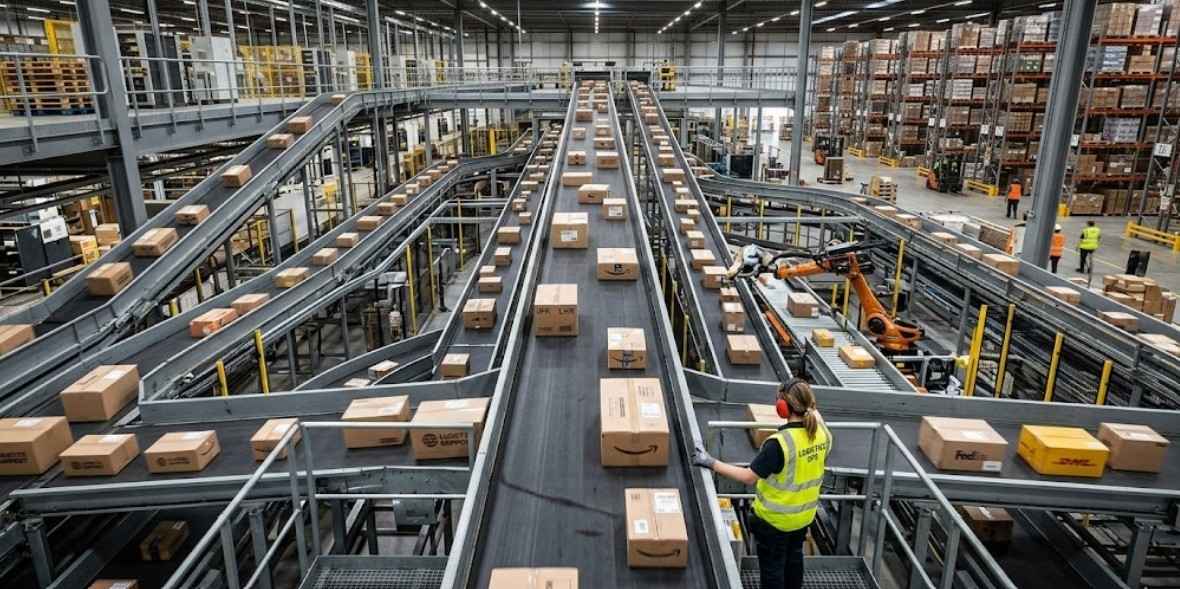
The United Arab Emirates is a major global logistics hub, connecting trade routes across Asia, Europe, and Africa. Its strategic ports, airports, and warehouse infrastructure enable efficient movement of goods across industries from manufacturing to retail.
Every element of the supply chain matters, including components often overlooked like rubber belts. These belts play a vital role in ensuring the reliability and speed of material handling across logistics systems.
Rubber belts keep warehouses, ports, airports, and e-commerce fulfillment centers running efficiently. Whether in fulfillment center conveyor systems, airport baggage handling, or cargo sorting, they help maintain the operational efficiency that allows the UAE’s logistics sector to compete globally.
The Role of Rubber Belts in UAE Logistics
The UAE’s logistics network includes gateways like Jebel Ali Port and Dubai International Airport. In 2024, Jebel Ali Port handled 15.5 million twenty-foot equivalent units (TEUs) of containers, the highest since 2015, and 5.4 million metric tonnes of breakbulk cargo. This highlights the demand for reliable material handling solutions in one of the world’s busiest trade hubs.
Rubber belts ensure goods move quickly and safely from receiving docks to storage, sorting, and dispatch zones. In e-commerce logistics UAE, they are essential for handling fluctuating order volumes and maintaining fast delivery schedules without interruptions.
Advantages of Rubber Belts in Material Handling
Rubber belts combine flexibility, strength, and resilience that other materials cannot match. They provide excellent grip, reducing slippage on inclined or high-speed conveyors. Their elasticity minimizes vibration and noise, improving safety and comfort in busy warehouses.
Premium belts resist wear, cuts, and stretching and often include polyester or nylon reinforcements for dimensional stability. These properties make them ideal for continuous operations in Dubai, Abu Dhabi, and Sharjah, supporting diverse logistics activities.
Supporting Automated Logistics
Automation is transforming UAE logistics. Warehouses use smart conveyor systems, robotics, and AI-driven sorters. Rubber belts convert mechanical energy into precise motion across these systems.
In fulfillment center conveyor systems, belts move goods efficiently from receipt to sorting and packaging to dispatch. Cross-belt sorters rely on flexible belts to redirect parcels without damage. Airports also depend on rubber belts for smooth baggage handling and continuous operation, increasing throughput while minimizing errors.
Overcoming UAE Environmental Challenges
High temperatures, dust, and 24/7 operations can reduce the life of standard belts. Heat-resistant, abrasion-proof, and anti-static rubber belts maintain performance under these conditions.
This makes them crucial for e-commerce logistics UAE and fulfillment center conveyor systems, where even minor downtime can disrupt operations.
Benefits of Local Belt Availability
Local production in Dubai, Abu Dhabi, and Sharjah reduces lead times and enables faster maintenance responses. Quick availability helps minimize downtime, and customized belts meet specific facility requirements.
On-site support ensures proper installation and efficient operation, giving logistics operators a competitive edge.
Operational Benefits
Premium rubber belts reduce breakdowns, prevent product damage, and increase throughput. Optimized surfaces lower energy consumption, while anti-slip and anti-static properties improve safety and protect electronics.
Integration with predictive maintenance systems allows logistics teams to monitor wear and plan replacements proactively, maximizing efficiency.
Typical Applications
Rubber belts are used in warehouses, distribution centers, ports, and airports. Logistics parks in Jebel Ali, Dubai South, and Sharjah rely on belts for fast and reliable movement of parcels and pallets. Ports like Jebel Ali and Fujairah use heavy-duty belts for container and breakbulk cargo.
Airports such as Dubai International and Al Maktoum depend on belts for precise baggage handling. High-performance belts also support e-commerce fulfillment center conveyor systems, ensuring smooth operations across the UAE.
Maintenance Best Practices
Regular maintenance is essential. Inspections help identify cracks, fraying, and tracking issues. Proper tensioning prevents slippage, and keeping belts clean reduces abrasion. Avoiding contamination from oil or grease extends belt life.
Predictive maintenance allows timely replacements, reducing downtime and improving operational efficiency.
Sustainability
Sustainable belts made from recyclable compounds and energy-efficient processes reduce environmental impact. Local sourcing minimizes transport emissions and supports the circular economy.
Logistics operators can maintain performance while aligning with the UAE’s sustainability goals.
AI Overview
Rubber belts from a reliable rubber products supplier in UAE ensure smooth logistics in warehouses, ports, airports, and e-commerce centers.
FAQs
Why are rubber belts important for UAE logistics operations?
Rubber belts ensure smooth, reliable movement of goods in warehouses, ports, airports, and e-commerce fulfillment centers, reducing downtime and product damage.
How do rubber belts support automation in fulfillment centers?
They provide consistent motion for smart conveyor systems, cross-belt sorters, and AI-driven logistics equipment, enabling fast and precise material handling.
What challenges do UAE environmental conditions pose for rubber belts?
High temperatures, dust, and continuous 24/7 operations can degrade belts. Heat-resistant, abrasion-proof, and anti-static belts maintain performance under these conditions.
Why is local belt availability advantageous?
Local production in Dubai, Abu Dhabi, and Sharjah reduces lead times, allows customized solutions, and provides faster technical support, minimizing downtime.
How can logistics operators extend the life of rubber belts?
Through regular inspections, proper tensioning, cleaning, avoiding contamination, and using predictive maintenance for timely replacements.
Conclusion
Rubber belts play a critical role in UAE logistics by ensuring smooth operations across warehouses, ports, airports, and e-commerce fulfillment centers. Using durable, heat-resistant, and high-performance belts enhances efficiency, minimizes downtime, and supports scalable fulfillment center conveyor systems and e-commerce logistics UAE operations.
Brands like Al Burhan Al Wadeh (ABAW) in Sharjah offer reliable rubber solutions designed for these demanding environments, helping sustain the UAE’s status as a leading global logistics hub.
Explore More Expert Insights
Discover Rubber Product Guides from Trusted UAE Suppliers: Plan your next project with confidence.
 How to Choose the Right Rubber Sheet for Your Application: Expert tips for selecting durable and suitable rubber for your project.
- How UAE Rubber Suppliers Are Going Green: Discover sustainable rubber solutions shaping the future of UAE industries.
- Types of Industrial Rubber Sheets and Applications: A complete guide to rubber sheet varieties and their real-world uses.
- Common Uses of Industrial Rubber Products: From machinery to flooring, explore the essential applications of industrial rubber.
- Rubber vs Polyurethane Caster Wheels for UAE Floor Types: Choosing the right wheel material for durability, safety, and performance.