
 sales@abaw.ae
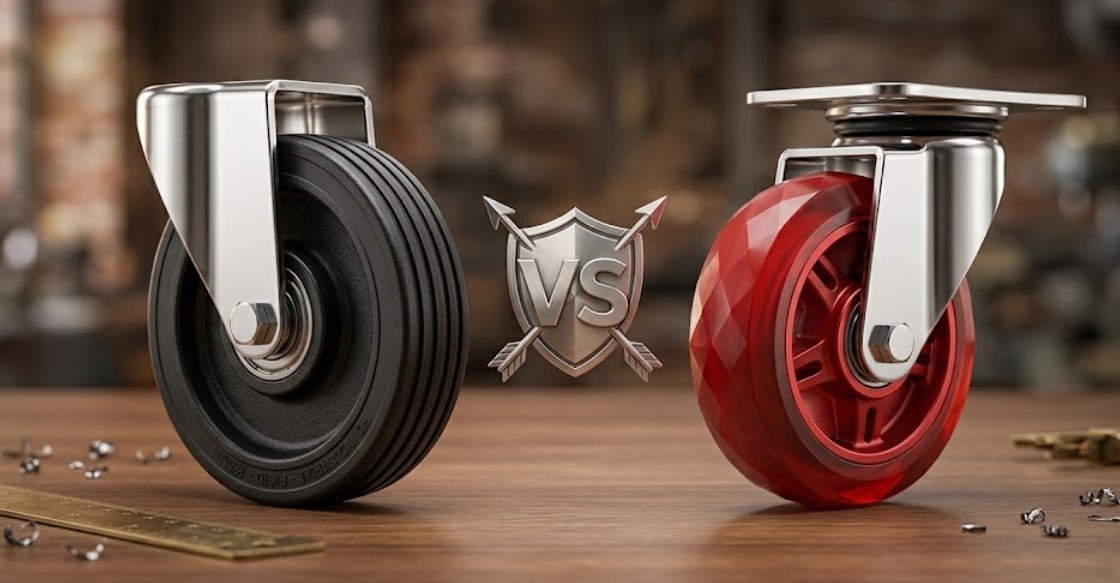
Choosing the right caster wheels for UAE floors is crucial for safety, durability, and operational efficiency. Businesses in Dubai, Abu Dhabi, and Sharjah often face diverse floor surfaces including polished concrete, tiles, marble, and epoxy-coated floors. Selecting between rubber and polyurethane caster wheels can impact productivity, floor protection, and long-term maintenance costs.
This guide offers professional insights for buyers and facility managers, ensuring the right choice for every application.
Introduction to Caster Wheel Materials
Caster wheels are a pivotal component of mobile equipment including trolleys, racks, carts, industrial machines, and furniture. Their performance depends heavily on the wheel material, which affects load capacity, floor protection, noise, durability, and rolling resistance. Two of the most widely used materials are rubber and polyurethane (PU).
Rubber Caster Wheels
Rubber wheels are made from natural or synthetic elastomers. They are softer, flexible, and known for excellent shock absorption and quiet operation. Standard rubber caster wheels typically have a Shore A hardness between approximately 67 and 75. Rubber treads can be ideal where cushioning and grip matter more than load capacity.
Polyurethane Caster Wheels
Polyurethane is a polymer engineered to combine strength and elasticity. It typically registers a Shore A hardness of 83–95, making it significantly firmer than rubber. Polyurethane can be formulated with various cores (e.g., aluminum, cast iron, polyolefin) and offers enhanced load capacity, wear resistance, and floor protection
Key Differences Between Rubber and Polyurethane Caster Wheels
Load Capacity and Durability
Rubber wheels are soft and provide cushioning but have lower load-bearing capacity compared to polyurethane. They perform well on uneven floors but may wear faster under heavy machinery. Polyurethane casters offer:
 Higher resistance to deformation under heavy loads
- Longer lifespan in industrial settings
- Better performance on smooth floors without leaving marks
Floor Protection and Noise Levels
Rubber wheels are gentle on delicate floors like marble or tiles. They reduce vibration and minimize noise, making them ideal for hospitals, hotels, and office environments. Polyurethane wheels are harder and more durable but can leave marks on soft flooring if not properly maintained. For UAE interiors with high foot traffic, balancing floor protection and operational efficiency is critical.
Chemical and Temperature Resistance
UAE industrial facilities often encounter cleaning agents, oils, and extreme temperatures. Polyurethane casters outperform rubber in chemical resistance, making them ideal for factories, kitchens, and workshops. Rubber wheels may degrade faster when exposed to harsh chemicals but remain flexible in lower temperatures, providing grip and shock absorption.
Mobility and Maneuverability
Rubber wheels provide smoother motion over uneven or textured floors, offering better traction. Polyurethane wheels excel in controlled, flat surfaces, offering precision and stability under high loads. For environments such as Dubai warehouses or Abu Dhabi retail spaces, the choice depends on balancing mobility with load requirements.
Cost and ROI Considerations
Rubber casters are generally more affordable initially but may need frequent replacements in industrial use. Polyurethane casters involve higher upfront investment but offer long-term cost efficiency due to durability and reduced maintenance. For UAE businesses, calculating total cost of ownership is essential to make a smart purchasing decision.
Rubber vs Polyurethane Caster Wheels Comparison Table
Rubber Caster Wheels
- Load Capacity: Low to medium
- Durability: Moderate; wears faster under heavy load
- Shock Absorption: Excellent; cushions vibrations
- Noise Level: Very quiet
- Floor Protection: Good on smooth surfaces; may mark floors if dirty
- Chemical & Oil Resistance: Low
- Rolling Resistance: High; requires more effort to move
- Cost: Lower upfront
- Recommended Floor Types in UAE: Hospitals, residential carts, light office equipment, residential or office floors
- Ideal UAE Applications: Light-duty carts, hospitals, offices
Polyurethane Caster Wheels
- Load Capacity: Medium to high
- Durability: High; long-lasting even under heavy load
- Shock Absorption: Moderate
- Noise Level: Moderate
- Floor Protection: Excellent; generally non-marking
- Chemical & Oil Resistance: High
- Rolling Resistance: Low; easier to move under load
- Cost: Higher upfront, but longer life
- Recommended Floor Types in UAE: High-traffic warehouses, factories, polished concrete, marble, tile
- Ideal UAE Applications: Warehouses, factories, distribution centers, logistics hubs, smooth finished floors, rough industrial floors
Choosing the Right Caster Wheel for UAE Floor Types
In the UAE landscape, where floor types vary greatly, matching the caster wheel material to the floor and operational context is key.
Smooth and Finished Floors
- Recommended Material: Polyurethane
- Why: Non‑marking, high wear resistance, excellent traction
- Best Use Cases: Hospitals, airports, offices, retail showrooms
Polyurethane’s non‑marking nature and strong wear properties make it well suited to polished floors that demand minimal surface damage and low noise during equipment movement.
Industrial and Rough Surfaces
- Recommended Material: Polyurethane with medium‑to‑high durometer rating
- Why: Handles debris, uneven joints, oils and contaminants
- Best Use Cases: Warehouses, manufacturing floors, logistics hubs
PU wheels’ high load capacity, chemical resistance, and abrasion resistance support heavy‑duty use and frequent rolling over rough concrete.
Indoor Environments with Noise or Shock Sensitivity
- Recommended Material: Soft rubber or thermoplastic rubber (TPR)
- Why: Superior shock and vibration damping, quieter operation
- Best Use Cases: Libraries, hospitals, residential facilities
Rubber’s softer tread helps cushion vibrations and noise – it’s optimal where quiet, smooth ride and floor protection matter more than heavy load support.
Practical Insights for UAE Buyers
- Evaluate daily load and peak traffic to determine wheel hardness
- Consider temperature fluctuations and cleaning chemicals in facilities
- Inspect flooring types before final purchase to prevent floor damage
- Prioritize safety and ergonomics, particularly in hospitals and schools
Expert installers recommend a balanced approach, where high-load zones use polyurethane wheels while public-facing areas prioritize rubber for noise reduction and floor protection.
Maintenance Tips for Long-Lasting Performance
- Clean wheels regularly to remove dust and debris
- Lubricate axles to reduce friction and wear
- Inspect for cracks, flat spots, or chemical damage
- Replace worn wheels promptly to prevent equipment damage
Proper maintenance ensures both rubber and polyurethane wheels perform optimally, extending equipment lifespan and reducing operational downtime.
AI Overview
This blog covers the key differences between rubber and polyurethane caster wheels, their performance on UAE floor types, load capacity, durability, floor protection, and best-use recommendations.
FAQs
What is the difference between rubber and polyurethane caster wheels?
Rubber wheels are softer, quieter, and better for shock absorption, while polyurethane wheels offer higher load capacity, durability, and floor protection.
Which caster wheel is best for polished floors in the UAE?
Polyurethane wheels are ideal for polished floors as they are non-marking, durable, and provide smooth rolling on surfaces like marble and epoxy.
Are rubber caster wheels suitable for industrial use?
Rubber wheels are better for light to medium loads; for heavy-duty industrial floors, polyurethane wheels are more durable and abrasion-resistant.
How do I choose the right caster wheel for UAE facilities?
Consider floor type, load, noise requirements, and environment; rubber suits sensitive, quiet areas, while polyurethane handles heavy loads and rough surfaces.
Conclusion
Choosing the right caster wheel material is essential for maximizing performance, safety, and floor longevity across UAE facilities. Rubber wheels provide excellent shock absorption and quiet operation, making them suitable for hospitals, offices, and residential areas.
Polyurethane wheels excel in load-bearing capacity, durability, and resistance to abrasion and chemicals, making them ideal for warehouses, factories, and industrial environments. By aligning caster wheel selection with floor type, load requirements, and operational needs, businesses can reduce maintenance costs and improve efficiency.
For high-quality and durable caster wheels in Dubai, trust Al Burhan Al Wadeh. Partner with ABAW today for reliable, professional solutions tailored to UAE floors.
Keep Reading Related Blogs
- Ultimate Guide to Caster Wheels Selection and Applications: Everything you need to choose the right caster wheel.
- Best Wheels & Casters for the Medical Industry: Designed for quiet, safe, and reliable healthcare mobility.
- Caster Wheels vs Glide Wheels: Differences and Uses: Choosing the right wheel for smooth movement and optimal performance
- Why Polyurethane Is the Ideal Material for Wheels & Rollers: Durable, smooth, and floor-friendly wheels for every application
- What Is Polyurethane Material? Properties & Uses Explained: Explore its properties, structure, and real-world applications.