
 sales@abaw.ae

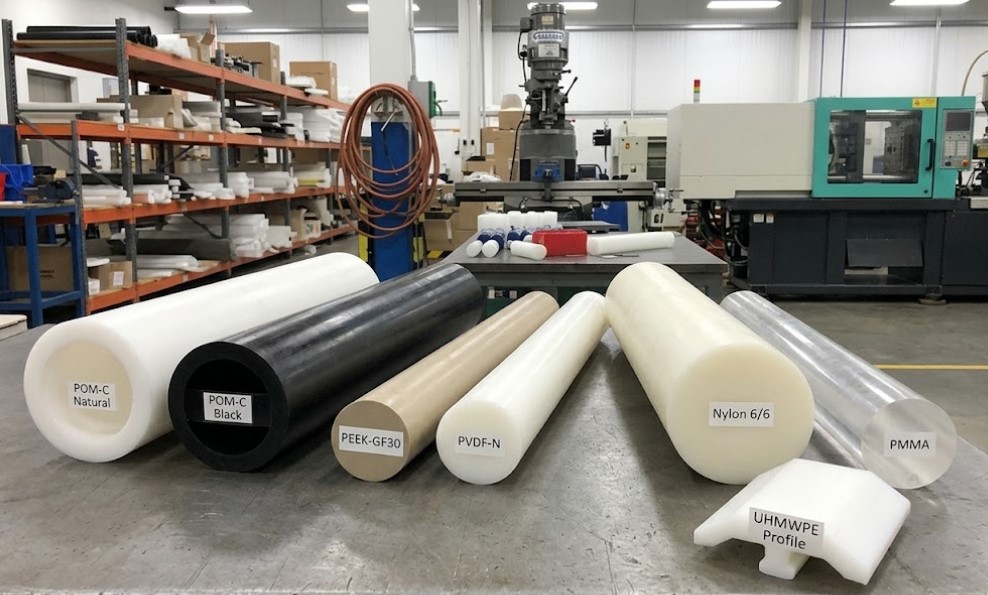
Industrial plants across the Emirates are replacing metal parts with engineering plastics at a steady pace. Heat, humidity, salt air and chemical exposure shorten the life of steel and aluminium components. Plastic rods and sheets solve many of these problems while cutting weight, noise and maintenance costs.
This guide explains the main material types, their properties and where each one performs best, so you can specify the right grade the first time.
What Are Plastic Rods and Sheets?
Plastic rods and sheets are solid engineering-grade polymer stock, supplied as round bars or flat boards. Manufacturers extrude or cast them, and workshops then machine them into gears, bushings, liners, guards and insulators. They offer corrosion resistance, low friction and good electrical insulation.
Rods are typically used for turned parts such as rollers, spacers and bearings. Sheets suit flat or milled components such as wear plates, tank panels and machine covers. Both formats can be cut, drilled, milled and welded using standard CNC machining equipment.
Which Types of Plastic Rods and Sheets Are Used Most in UAE?
The most common engineering plastics in the UAE are nylon (PA), acetal (POM), HDPE, UHMW-PE, PTFE, PVC, polypropylene, acrylic (PMMA) and polycarbonate. Each material balances strength, temperature tolerance, chemical resistance and cost differently, so the best choice depends on the application.
Nylon (PA6 and PA66)
Nylon offers high toughness and excellent wear resistance. It suits gears, bushings, rollers and conveyor components. Its main weakness is moisture absorption, which can change dimensions in humid coastal conditions. Oil-filled and glass-filled grades improve stability and load capacity.
Acetal (POM-C and POM-H)
Acetal delivers tight dimensional stability, low friction and high stiffness. It is the usual choice for precision gears, valve parts and pump components. It absorbs very little water, which makes it more predictable than nylon in humid environments.
HDPE and UHMW-PE
High-density polyethylene resists chemicals and moisture and is available in food-safe grades. UHMW-PE adds exceptional abrasion and impact resistance. Both are widely used for chute liners, cutting boards, wear strips and marine fenders.
PTFE (Teflon)
PTFE tolerates continuous temperatures up to roughly 260°C and resists almost every industrial chemical. It has one of the lowest friction coefficients of any solid. Its softness and tendency to creep under load limit its use in structural parts.
PVC, Polypropylene, Acrylic and Polycarbonate
Rigid PVC and polypropylene sheets are standard for chemical tanks, ducting and lab benches. Acrylic provides optical clarity for displays and signage. Polycarbonate offers high impact strength for machine guards and protective screens.
Which Plastic Handles Heat, Chemicals and Wear Best?
PTFE handles the highest heat and the widest chemical exposure, UHMW-PE leads in abrasion resistance, and acetal gives the best precision under load. Nylon balances toughness and cost, while HDPE and polypropylene are the economical options for chemical contact.
UAE operating conditions make these distinctions practical. Outdoor surface temperatures regularly exceed 50°C, and desalination, petrochemical and food-processing sites add constant moisture or chemical contact.
Here is a quick reference:
 High heat: PTFE, PEEK, and glass-filled nylon
- Chemical contact: HDPE, polypropylene, PVC and PTFE
- Heavy wear and impact: UHMW-PE and nylon
- Precision moving parts: acetal and oil-filled nylon
- Transparency: acrylic and polycarbonate
How Do You Choose the Right Plastic Rod or Sheet?
Choose by matching five factors: load, temperature, chemical exposure, moisture and compliance requirements. Check each against the material’s datasheet, then confirm test values against standards such as ASTM International methods for tensile strength and heat deflection before ordering production quantities.
Use this five-point selection matrix before you request a quote:
- Load: Static load, dynamic load or impact.
- Temperature: Continuous operating range and short-term peaks.
- Chemistry: Acids, solvents, oils, cleaning agents or seawater.
- Moisture: Dimensional tolerance risk in humid or submerged service.
- Compliance: Food contact, electrical insulation or fire rating needs.
Two edge cases cause most failures. First, nylon parts machined to tight tolerances in dry conditions can swell after installation in humid areas. Second, PTFE used as a load-bearing surface will deform over time. Specify filled grades or switch materials when these risks apply.
Our team can help you match grades to your operating conditions. Explore the available plastic rods and sheets supplier in UAE range to compare sizes, colours and grades.
Where Are Plastic Rods and Sheets Used in UAE Industries?
UAE industries use plastic rods and sheets in oil and gas, construction, food processing, water treatment, marine, packaging, electrical and signage applications. They replace metal where corrosion, weight, noise or hygiene is a concern, and they simplify maintenance schedules.
Oil, Gas and Water Treatment
Seals, valve seats and pump wear rings use PTFE, PEEK and acetal. Desalination plants rely on polypropylene and PVC sheets for tanks and lining because they resist chlorides and brine.
Food and Beverage
Food-grade HDPE and UHMW-PE serve as cutting surfaces, conveyor guides and star wheels. These materials are non-porous, easy to sanitise and available in FDA-compliant grades.
Construction, Marine and Logistics
Port and marine operations near Jebel Ali and the Sharjah creek use UHMW-PE wear pads and fender facings. Construction firms specify acrylic and polycarbonate for glazing, partitions and safety covers.
Electrical and Manufacturing
Nylon, acetal and phenolic-grade sheets act as electrical insulators and machine components. Workshops value their predictable machinability and low cost per part compared with machined metals.
Plastic Rods vs. Sheets: Which Format Do You Need?
Choose rods for turned, cylindrical parts like rollers, bushings and shafts. Choose sheets for flat, milled or fabricated parts like wear plates, panels, liners and covers. Many projects use both, with rods forming the moving components and sheets forming the structure.
Consider material yield. Cutting round parts from sheet wastes stock, while cutting flat parts from large-diameter rod costs more. Ordering the format closest to your finished geometry reduces scrap and machining time.
Final Verdict: Are Plastic Rods and Sheets Worth Considering?
Plastic rods and sheets are worth considering whenever corrosion, weight, friction, noise or hygiene affects your equipment. They are not a universal replacement for metal. Extreme structural loads or very high temperatures still call for steel, alloys or specialised composites.
For most UAE maintenance, manufacturing and fabrication needs, the right engineering plastic cuts replacement frequency and downtime. Match the grade to your load, heat and chemical profile, and confirm technical data before purchase.
If you are specifying material for a new project or replacing a failing component, request a datasheet review and a sample cut. For buyers in Sharjah, Dubai and across the UAE, you can contact ABAW team for quotations and get grade recommendations matched to your application.
FAQs
What is the best plastic rod for high-wear applications in UAE?
UHMW-PE and nylon are the best choices for high-wear use. UHMW-PE offers superior abrasion and impact resistance, which suits chute liners and wear strips. Nylon provides strength and low friction for gears and bushings. Oil-filled nylon grades extend service life in dry-running parts.
Can plastic sheets withstand UAE summer temperatures?
Yes, when you choose the correct grade. Acetal, nylon, PTFE and polycarbonate remain stable well above typical UAE ambient temperatures. HDPE and standard PVC soften at lower limits, so check continuous service temperature and avoid direct sun exposure under load.
Which plastic is food-safe for processing equipment?
Food-grade HDPE, UHMW-PE, acetal and PTFE are common food-safe options. Always confirm the supplier’s compliance documentation, such as FDA or equivalent food-contact certification, for the exact grade and colour before installing it in a food-processing line.