
 sales@abaw.ae
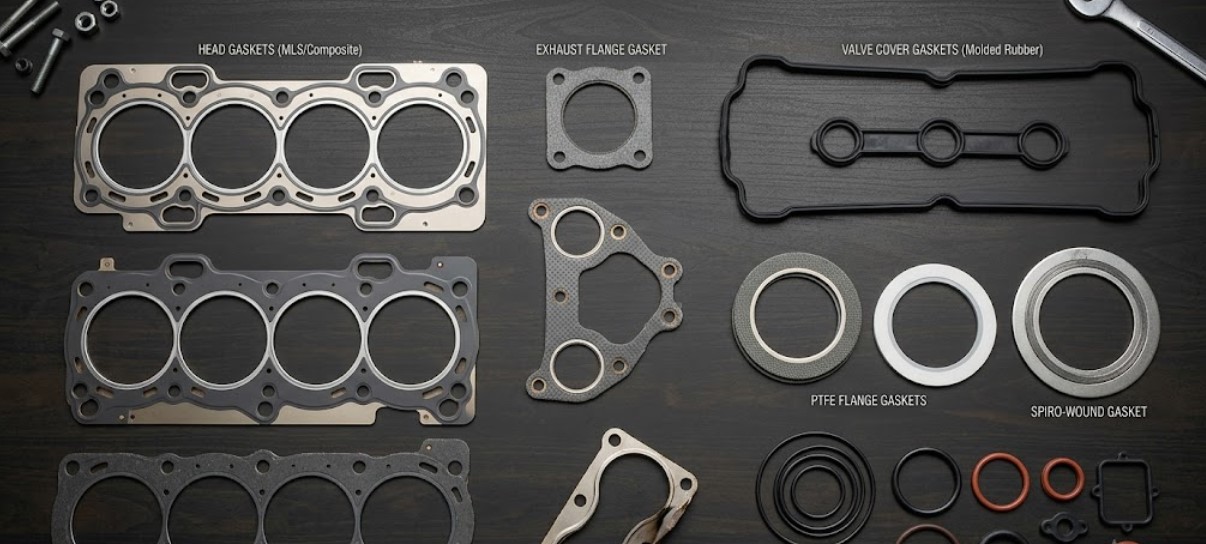
Gaskets are essential sealing components used across various industries to prevent leakage and maintain pressure between two connected surfaces. They are commonly installed in pipelines, valves, pumps, heat exchangers, engines, and industrial equipment where preventing fluid or gas loss is critical.
Although simple in design, gaskets play a major role in equipment reliability, operational safety, and maintenance efficiency. The correct gasket helps reduce downtime, protect machinery, and improve the overall performance of industrial systems.
This guide explains what a gasket is, how it works, different types of gaskets, common materials, industrial applications, and how to select the right sealing solution.
What Is a Gasket?
A gasket is a mechanical sealing component placed between two stationary mating surfaces to create a leak-tight seal. When compressed by bolts or fasteners, it fills small gaps and surface irregularities, preventing the escape of liquids, gases, steam, and chemicals.
Unlike O-rings and mechanical seals, which are often used for moving components, gaskets are mainly designed for static sealing applications where connected parts remain fixed.
A high-quality gasket performs several important functions:
 Prevents leakage of liquids, gases, steam, and chemicals
- Maintains pressure within industrial systems
- Compensates for minor surface imperfections
- Reduces vibration between connected components
- Protects equipment from contamination
- Improves operational safety and reliability
How Does a Gasket Work?
Even precision-machined surfaces contain microscopic imperfections that can create leakage paths. When a gasket is installed between two surfaces and compressed using bolts, it deforms slightly to fill these gaps and creates a continuous sealing barrier.
The effectiveness of a gasket depends on several operating factors, including:
- Operating pressure
- Service temperature
- Chemical compatibility
- Flange condition
- Proper bolt tightening
Using an unsuitable gasket material or incorrect installation method can result in leakage, equipment damage, and increased maintenance requirements.
Common Types of Gaskets
Different industrial applications require different gasket designs based on pressure, temperature, and operating conditions.
Spiral Wound Gaskets
Spiral wound gaskets are widely used for high-pressure and high-temperature applications. They are manufactured by combining alternating layers of metal windings and filler materials to create a flexible yet durable sealing solution.
They are commonly used in:
- Oil and gas facilities
- Refineries
- Steam systems
- Chemical processing plants
- Pressure vessels
Ring Type Joint (RTJ) Gaskets
Ring Type Joint gaskets are precision-machined metal sealing rings designed for extreme pressure applications. They create a reliable metal-to-metal seal and are commonly used where maximum sealing performance is required.
Typical applications include offshore equipment, API flanges, drilling systems, pressure vessels, and high-pressure valves.
PTFE Gaskets
PTFE gaskets are known for their excellent chemical resistance and low friction properties. They are suitable for applications where exposure to aggressive chemicals, acids, and corrosive materials is common.
They are widely used in:
- Chemical processing industries
- Pharmaceutical facilities
- Food processing plants
- Water treatment systems
Rubber Gaskets
Rubber gaskets are flexible sealing components commonly used in pipelines, pumps, HVAC systems, machinery, and industrial equipment. They are an important part of industrial rubber products, offering reliable sealing performance in applications where flexibility and resistance to environmental conditions are required.
Available in materials such as EPDM, NBR, Silicone, and Neoprene, rubber gaskets provide reliable performance across different operating conditions. A trusted rubber gasket supplier UAE can help select suitable solutions for industrial sealing requirements.
CNAF Gaskets
Compressed Non-Asbestos Fibre (CNAF) gaskets are widely used as an alternative to traditional asbestos-based sealing materials. They provide dependable sealing performance for water, steam, oil, and general industrial applications.
Their balance of flexibility, durability, and chemical resistance makes them suitable for various industrial environments.
Graphite Gaskets
Graphite gaskets are designed for high-temperature applications where standard sealing materials may not perform effectively. Their excellent thermal stability makes them ideal for boilers, heat exchangers, steam systems, and power generation equipment.
Common Gasket Materials
The material of a gasket directly affects its performance, durability, and suitability for different applications.
- PTFE (Polytetrafluoroethylene)
- Common Applications: Chemical processing
- Main Advantage: Excellent chemical resistance
- Rubber
- Common Applications: Water systems, HVAC, and general sealing
- Main Advantage: Flexible and cost-effective
- Graphite
- Common Applications: High-temperature systems
- Main Advantage: Superior heat resistance
- CNAF (Compressed Non-Asbestos Fiber)
- Common Applications: General industrial use
- Main Advantage: Reliable performance
- Stainless Steel
- Common Applications: High-pressure systems
- Main Advantage: High mechanical strength
- Copper
- Common Applications: Heat transfer applications
- Main Advantage: Excellent thermal conductivity
Selecting the correct gasket material depends on operating pressure, temperature, chemical exposure, and environmental conditions.
Industrial Applications of Gaskets
Gaskets are used across multiple industries where reliable sealing is required.
Oil and Gas Industry
Oil and gas facilities rely on high-performance gaskets such as spiral wound and RTJ types for pipelines, valves, pressure vessels, and offshore equipment operating under demanding conditions.
Chemical Processing
Chemical plants use PTFE, graphite, and specialised sealing materials to handle corrosive chemicals while maintaining safe and efficient operations.
Water Treatment
Rubber and EPDM gaskets are widely used in pumps, filtration systems, valves, and pipeline connections to prevent leakage and maintain system efficiency.
Power Generation
Power plants use graphite and spiral wound gaskets in boilers, turbines, heat exchangers, and steam systems where resistance to high temperatures and pressure is essential.
Industrial Equipment and Doors
Rubber sealing solutions are commonly installed in machinery covers, electrical panels, cabinets, cold rooms, and industrial doors to protect against dust, moisture, and air leakage.
Selecting products from a reliable rubber door gasket supplier UAE ensures proper sealing performance and long-term durability in demanding environments.
How to Choose the Right Gasket
Choosing the correct gasket requires careful consideration of operating conditions and equipment requirements.
Temperature Requirements
High-temperature applications typically require graphite, spiral wound, or metal gaskets, while rubber and CNAF materials are suitable for moderate temperature conditions.
Pressure Rating
High-pressure systems require stronger sealing solutions such as RTJ and spiral wound gaskets. Lower-pressure applications may use rubber or fibre-based gasket materials.
Chemical Compatibility
The gasket material must be compatible with the process media. PTFE is often preferred for aggressive chemicals because of its excellent resistance.
Flange Design
The gasket must match the flange type, including Raised Face (RF), Flat Face (FF), or Ring Type Joint (RTJ), to achieve proper sealing performance.
Benefits of Using the Right Gasket
Selecting the correct gasket provides several operational advantages:
- Prevents leaks and product loss
- Improves workplace safety
- Extends equipment service life
- Reduces maintenance costs
- Maintains system efficiency
- Minimizes unexpected downtime
- Supports reliable industrial operations
Signs a Gasket Needs Replacement
Regular inspection helps identify gasket problems before they cause major equipment failures.
Common warning signs include:
- Leakage around flange connections
- Cracks or deformation
- Material deterioration
- Pressure loss
- Corrosion near sealing surfaces
- Frequent bolt adjustments
Replacing damaged or worn gaskets at the right time helps prevent costly repairs and production interruptions.
Conclusion
Gaskets are a fundamental part of industrial sealing systems, helping prevent leaks, maintain pressure integrity, and ensure reliable equipment operation across various industries. Selecting the right gasket type and material based on application requirements, temperature, pressure, and chemical exposure is essential for achieving long-lasting performance.
Whether used in pipelines, valves, pumps, or processing equipment, the correct sealing solution helps reduce maintenance issues and improve system efficiency. For more insights into industrial sealing products and solutions, explore Al Burhan Al Wadeh or contact our team for assistance in identifying the right gasket for your specific requirements.
Explore More Expert Insights
Discover Industrial Sealing & Rubber Guides from Trusted UAE Experts: Expand your knowledge with practical resources on gaskets, rubber products, and industrial applications.
- OEM vs Aftermarket Rubber Parts in UAE: Learn the key differences between OEM and aftermarket rubber components to choose the right solution for performance, quality, and value.
- Common Caster Wheel Problems and How to Fix Them: Identify common caster wheel issues and discover practical maintenance tips to improve performance and extend service life.
- Polyurethane vs Rubber: What Is the Difference?: Compare polyurethane and rubber based on durability, flexibility, abrasion resistance, and industrial applications.
- Caster Wheels vs Glide Wheels: Differences and Uses: Understand the differences between caster wheels and glide wheels to select the ideal mobility solution for your application.
- Types of Industrial Rubber Sheets and Applications: Explore the different types of industrial rubber sheets, their properties, and where they are commonly used for sealing, insulation, and protection.